
Factory guide
The Mold Inside Your Vanity Isn't a Leak: Condensation Trapped Behind Closed Cabinet Doors
Condensation mold inside a bathroom vanity is mold that grows from damp air trapped in a closed cabinet, with no leak feeding it. The inspector’s explanation is that moisture diffuses through the wall, the closed door holds it in, and shower steam adds more; when the damp air cools against the back panel, water forms on the surface, and mold follows. A dry pipe area with a moldy back panel is the pattern the inspector filmed.
By Vora Surfaces Factory Editorial Team · Published 2026-11-13 · Foshan, China
The video that started the argument
On 30 August 2026, home inspector Brantley May (@brantley.iaq) posted a video that gathered about 12,000 likes and 400 comments. He opens a vanity door and shines a flashlight on broad grey-white mold across the back panel and side panels, then points the light at the pipes. The pipe area shows no water stains at all.
The comments split into two camps: a missed leak, or condensation. May answered in the comments more than once: moisture moves through the wall by diffusion, the cabinet traps it, and the trapped air reaches the dew point inside the cabinet. This article reports the inspector’s explanation as his account of what he saw. Only an on-site inspection settles which one it is.
A second video, from Rick Gannon on 7 June 2026, shows the same problem from the other end — smell: a guesthouse vanity cabinet that gave off a damp, musty odor when opened, described by viewers as smelling like cat urine. The post drew about 1,500 likes and 96 comments. No leak was shown. The shared thread is a door that stays shut: close it and the cabinet becomes a small, still climate of its own, where mold can grow while the plumbing stays dry.
Why a closed cabinet grows mold
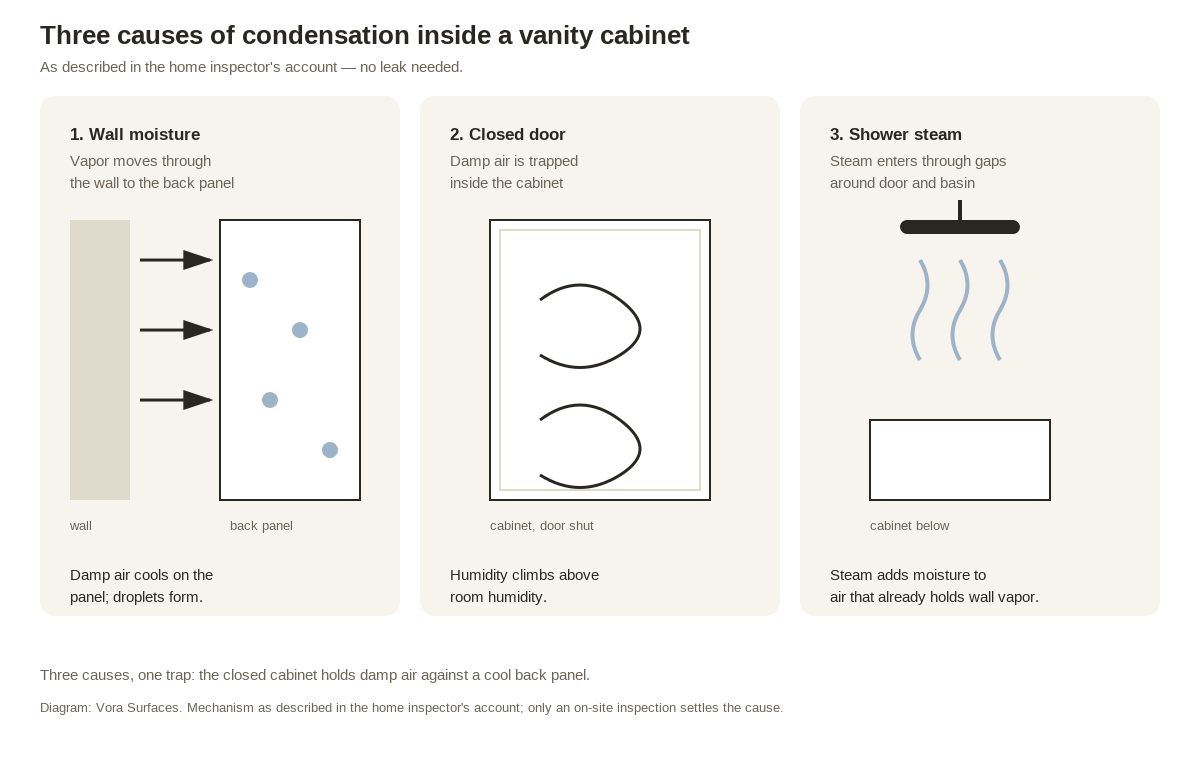
A vanity cabinet sits in the dampest room in the house, pressed against a wall, with a door that spends most of the day closed. Three ordinary factors meet inside it — together, the condensation trap.
1. Moisture diffusing through the wall. The inspector’s explanation is that bathroom walls carry moisture from showers, and that this moisture moves through the wall as vapor and reaches the back panel. The back panel can be the coldest surface in the cabinet, because it sits against the wall and away from the room’s warm air. In that account, vapor that meets a cool surface can turn into liquid water on that surface. Owners describe it in plain words: “the back of the cabinet feels damp” or “there is a dark patch behind the pipes, and the pipes are dry.”
2. A closed door trapping damp air. A cabinet door that stays shut blocks air movement. Damp air that enters the cabinet has nowhere to go, so cabinet humidity can climb above room humidity. Each shower can add a fresh load of steam, and the closed door keeps it there long after the bathroom itself has dried. Owners describe it as a smell first: the air inside feels close and musty after a shower.
3. Shower steam feeding the cycle. A hot shower fills the bathroom with steam, and some of it finds its way into the cabinet through gaps around the door and the basin cutout. The steam adds moisture to air that already holds wall vapor, and warms the cabinet air while the back panel stays cool. In the inspector’s account, warm damp air meeting a cool panel is the condition where condensation forms.
None of the three factors proves condensation on its own. A leak can produce a damp back panel too, and a musty smell can come from a drain. Together, though, they explain how mold grows in a cabinet where the pipes stay dry — the case the inspector filmed.
Condensation or leak: what to look for
Observable differences between the two patterns — a guide to observations; only an on-site inspection settles which one it is. When the signs point in different directions, or when damp persists, a local professional should check the cabinet in person under local rules.
| Observation | Condensation pattern | Leak pattern |
|---|---|---|
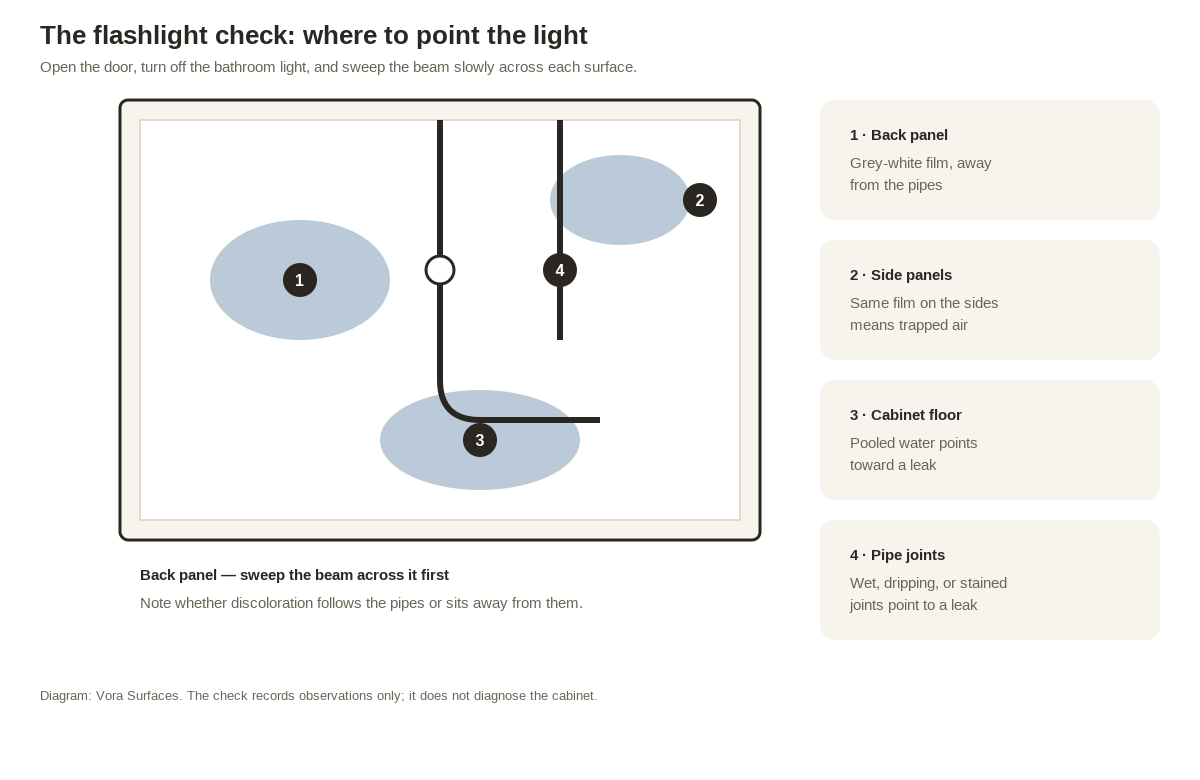
| Pipes and joints | Dry to the touch, no drips | Wet, dripping, or stained around a joint |
| Mold location | Back panel and side panels, away from the pipes | Around a joint, a trap, or a supply line |
| Smell | Musty, close air inside the cabinet | Musty, or closer to a drain smell near the trap |
A cabinet that matches the left column across most rows leans toward condensation. A cabinet that matches the right column on even one row — a wet joint, a drip, a stain trail — deserves a plumbing check first. The two patterns can overlap, so a cabinet with wet pipes and a moldy back panel needs both problems checked.
A 3-step check you can run in five minutes
This check uses a flashlight, your nose, and your hand, and it records observations only; it does not diagnose the cabinet.
Step 1: Shine a flashlight on the back panel and the side panels. Open the door, turn off the bathroom light, and run a flashlight slowly across the back panel, then each side panel, then the cabinet floor. Note where the discoloration sits and whether it follows the pipes or sits away from them. A flashlight shows what room light hides: early mold often reads as a faint grey-white film.
Step 2: Note the smell, and where it comes from. Close the door for a few minutes, open it, and note the first smell. A musty, close smell from the cabinet air points toward trapped damp; a smell from the drain or the trap points toward the plumbing.
Step 3: Touch the back panel. Press your palm flat against the back panel for a few seconds. Note whether it feels cool and damp, or dry and close to room temperature. A cool, damp panel with dry pipes beside it fits the condensation pattern; a dry panel with a wet joint fits the leak pattern.
Write down what you saw, smelled, and felt, with the date. If the patch grows between checks, or the panel stays damp, the record gives a professional something concrete to work from. If the checks stay unclear, or damp persists, ask a local professional to inspect the cabinet in person. Buyers can run the same check on delivery day. The cabinet body: points 4–6 covers the cabinet-body checks in the twelve-point delivery checklist.
Three countermeasures that work together
No single countermeasure covers the trap, because the trap has three causes. The three measures below address one cause each, and they work as a set.
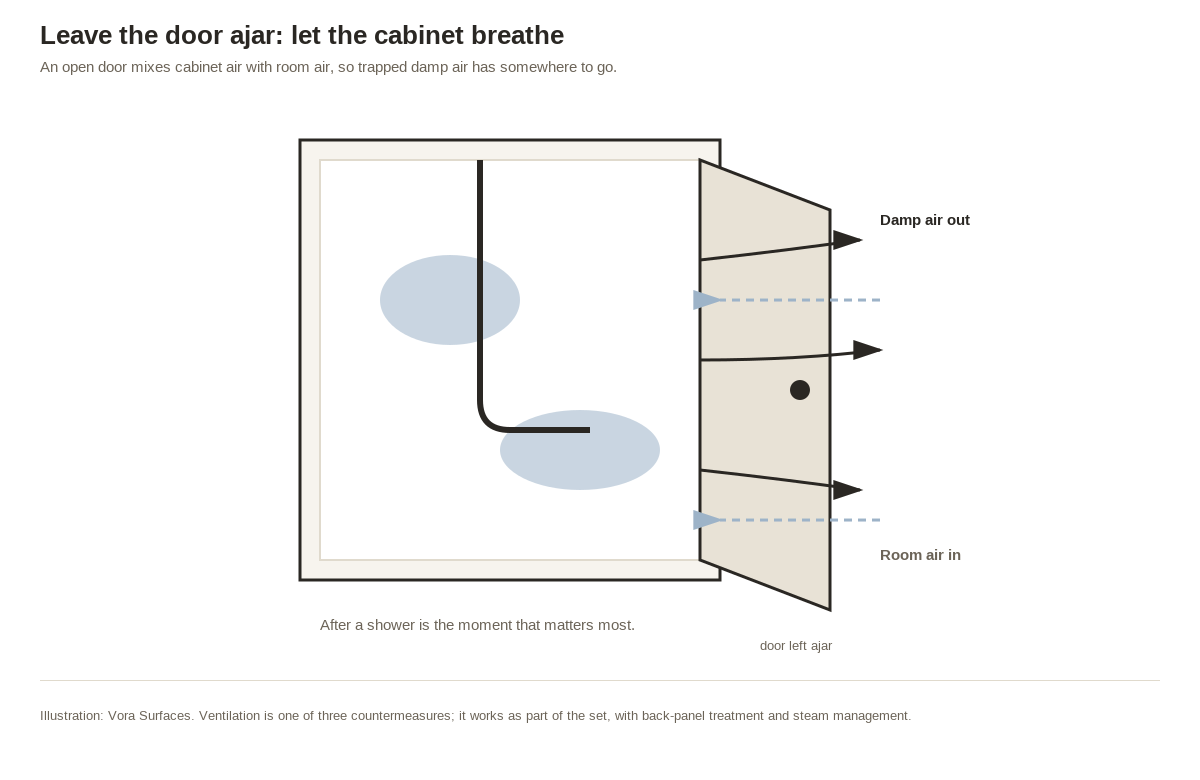
Leave the door ajar, or add ventilation. An open door lets cabinet air mix with room air, which helps reduce the trapped humidity that feeds condensation. Leaving the door ajar after a shower is the simplest version; a small vent in the door serves the same purpose. Ventilation helps reduce damp air, and it does not dry a panel that stays cold and wet on its own — it belongs with the other two measures.
Treat the back panel against moisture. The back panel is where condensation lands first, so it is the surface to protect. A moisture-proof treatment on the back panel helps reduce how much water the panel absorbs when condensation forms. When ordering a new vanity, ask the supplier what moisture-proof treatment the cabinet body and back panel carry, in writing. Which cabinet material survives a wet bathroom? walks through how solid wood, plywood, and MDF behave when water gets in.
Manage shower steam at the source. Shorter showers, an exhaust fan that runs during and after the shower, and a bathroom door left open after use all help reduce the steam load that reaches the cabinet.
What dealers can say to a homeowner
A homeowner who finds mold inside a vanity usually arrives convinced something leaks. The useful first sentence is a question: “Are the pipes dry while the back panel is damp?”
That question moves the conversation from a conclusion to an observation, and sets up the next step — a plumber when the pipes are wet, ventilation and back-panel treatment when the pipes are dry and the panel is damp. A replacement helps when it comes with ventilation, a treated back panel, and steam management, built into the new cabinet from the start.
The Vora cabinet, in one paragraph
Vora cabinet bodies use solid wood with a moisture-proof treatment, one factor that helps reduce condensation-mold risk inside the cabinet. The hot-bent basin on top is a single piece with no seam and no glue joint. Buyers can ask us about the cabinet interior’s moisture-proof configuration when they order. The related mold problem at the basin itself is covered in Why does mould appear around the drain and in the corners?, with the weekly routine that keeps it in check.
Frequently asked questions
Is mold inside a bathroom vanity always a leak?
No. In a home-inspector video from August 2026, a vanity’s back and side panels carried heavy mold while the pipes stayed dry. The inspector’s explanation is that moisture diffusing through the wall gets trapped inside the closed cabinet until it reaches the dew point. A leak is one possible cause, and condensation is another — telling them apart takes an on-site check.
Why does mold grow inside a vanity with no water stains?
In the inspector’s explanation, condensation forms differently from a leak: damp air cools against the back panel and tiny droplets appear on the surface. Water stains mark liquid water from a leak. The water arrived as vapor through the wall and the air, so the panel can look stained by mold while the pipes stay dry.
Does leaving the cabinet door ajar help?
It helps reduce trapped damp air, because an open door lets cabinet air mix with room air. It is one of three countermeasures in this guide, alongside back-panel treatment and steam management. A door left ajar does not dry a cold, damp panel on its own, so it works as part of the set, with the other two measures.
How can I tell condensation mold from a leak?
Start with three observations: shine a flashlight on the back panel and side panels, note whether the smell is musty or drain-like, and feel whether the panel is cool and damp. Dry pipes with mold on the back panel point toward condensation; wet pipes or drips point toward a leak. When the signs stay unclear, a local professional should check the cabinet in person.
Does a solid wood cabinet stop mold inside a vanity?
No single material stops it. Vora cabinet bodies use solid wood with a moisture-proof treatment, one factor that helps reduce condensation-mold risk inside the cabinet. Ventilation, back-panel treatment, and steam management still matter. Suspected mold or persistent damp should be checked by a local professional under local rules.
Ask us about the cabinet interior
Specifying a vanity for a humid bathroom, or replacing a cabinet that grew mold with dry pipes? Browse the cabinet range and configure a unit noting the interior moisture-proof treatment — or send us an inquiry and ask about the cabinet interior’s moisture-proof configuration.
After you send an inquiry, a member of the Vora Surfaces team replies to that inquiry directly. Your details are used only for this inquiry; we do not send mass mailings.
Editorial note: This guide covers inspection principles and cabinet measures only. It does not identify mold species, assess health risk, or recommend remediation products. Suspected mold or persistent damp should be checked by a local professional under local rules. Specifications verified against Vora Surfaces factory records. Spotted an error? Email corrections to vorasurfaces@gmail.com.
Frequently asked questions
Is mold inside a bathroom vanity always a leak?
No. In a home-inspector video from August 2026, a vanity's back and side panels carried heavy mold while the pipes stayed dry. The inspector's explanation is that wall moisture gets trapped inside the closed cabinet until it reaches the dew point. A leak is one possible cause, and condensation is another — telling them apart takes an on-site check.
Why does mold grow inside a vanity with no water stains?
In the inspector's explanation, condensation forms differently from a leak: damp air cools against the back panel, and tiny droplets appear on the surface itself. Water stains mark liquid water from a leak. The panel can look stained by mold while the pipes stay dry, because the water arrived as vapor through the wall and the air.
Does leaving the cabinet door ajar help?
It helps reduce trapped damp air, because an open door lets cabinet air mix with room air. It is one of three countermeasures in this guide, alongside moisture-proof treatment on the back panel and managing shower steam. A door left ajar on its own does not dry a panel that stays cold and damp, so it works as part of the set, together with the other two measures.
How can I tell condensation mold from a leak?
Start with three observations: shine a flashlight on the back panel and side panels, note whether the smell is musty or closer to a drain smell, and touch the panel to feel whether it is cool and damp. Dry pipes with mold on the back panel point toward condensation; wet pipes, drips, or a stain that grows after the taps run point toward a leak. When the signs stay unclear, a local professional should check the cabinet in person.
Does a solid wood cabinet stop mold inside a vanity?
No single material stops it. Vora cabinet bodies use solid wood with a moisture-proof treatment, one factor that helps reduce condensation-mold risk inside the cabinet. Ventilation, back-panel treatment, and steam management still matter, and any suspected mold or persistent damp should be checked by a local professional under local rules.
Sourcing hot-bent basins for your next project?
Send your drawings and target quantities — we'll confirm feasibility from the factory floor.
Configure your inquirySee the products behind these guides: production cabinet styles and buying terms for buyers & OEM.
Specifications verified against Vora Surfaces factory records. Editorial review applied. Spotted an error? Email corrections to vorasurfaces@gmail.com.