
Factory guide
The Honest Downsides of Sintered Stone
Sintered stone earns its place in bathrooms through a seamless basin shape and a hard face that handles daily washing with little upkeep. The honest downsides sit alongside those strengths: a higher price, real weight, edges that can chip, repair options that stay limited in the field, an installer skill requirement, a narrow edge-profile range, and printed patterns that stay in a surface layer. A buyer who checks those seven points before ordering gets the material on its own terms.
By Vora Surfaces Factory Editorial Team · Published 2026-10-30 · Foshan, China
The price question
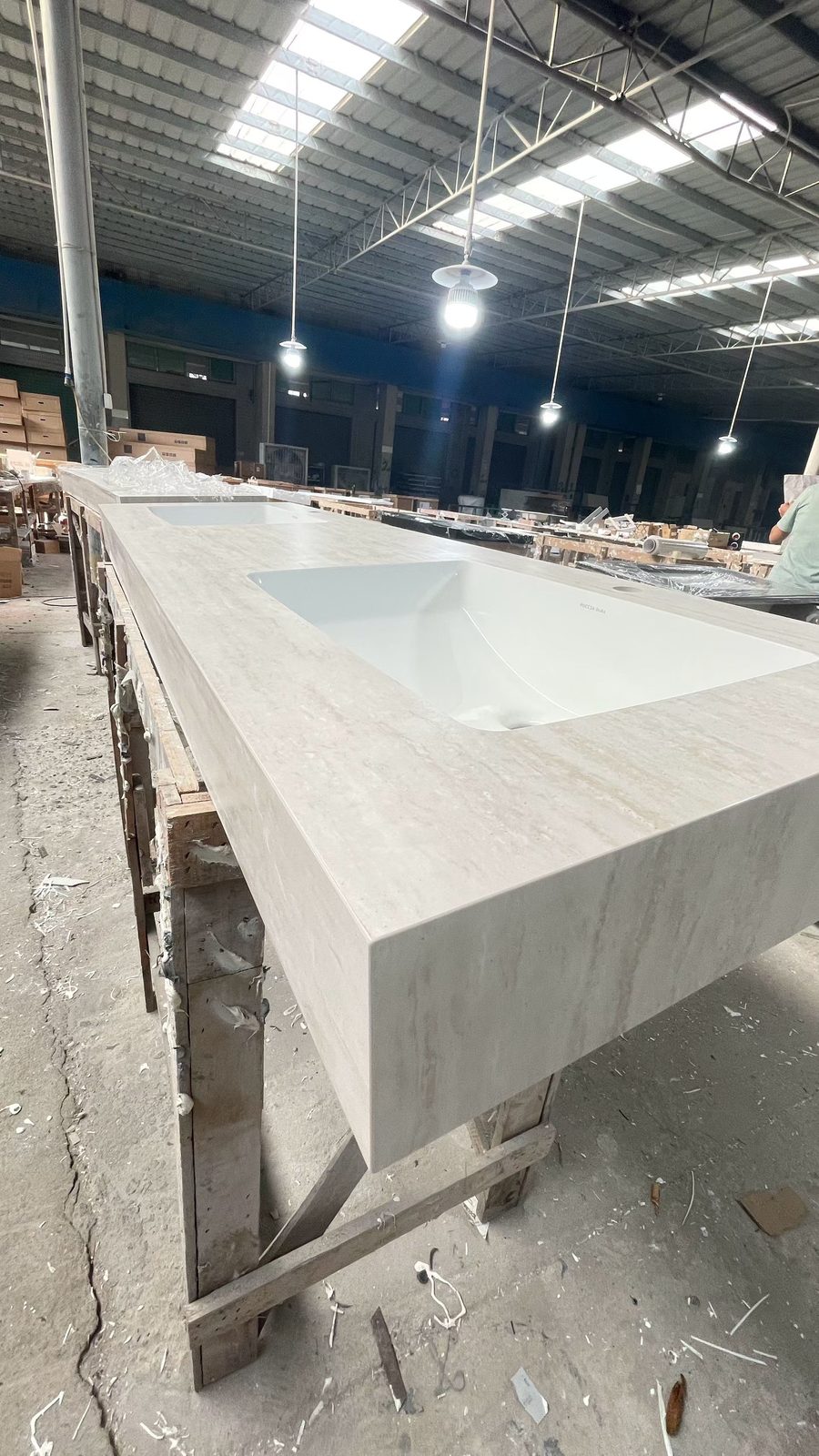
Cost is the downside buyers meet at the outset. Buying guides from aurastone.com.sg and gardenfrontier.com describe sintered stone as costly, and more expensive than materials like laminate or solid surface. The gap reflects slab production, shaping, transport weight, and skilled finishing labour.
Price alone tells a buyer little. Compare like with like: slab thickness, basin shape, cabinet, mirror, hardware, and packing. Vora common widths run 60–120 cm, and the showroom chart lists sizes up to 1600×2800 mm and thicknesses of 6, 11, and 12 mm, so confirm the format at order time. Ask what the quoted figure covers, and confirm unclear items at quotation stage.
Weight and support
Sintered stone carries real weight, and that weight shapes the whole installation. Aurastone.com.sg puts it plainly: sintered stone is heavy and may require additional support structures. A wall-hung unit transfers cabinet, stone top, basin water, and stored items into the wall through its mounting rail, so plan wall structure before delivery day. On stud walls, add blocking between studs at rail height, or fix into masonry or concrete where the building allows.
Floor-standing units sidestep the wall question, and the cabinet under the stone still matters. Vora cabinet bodies are solid wood with moisture-proof treatment, which helps a cabinet hold its shape in bathroom humidity, since a cabinet that swells or twists changes the support under the stone. Our guide to why stone vanity tops crack traces how uneven support loads cutouts, corners, and seams. Vora states no wall-fixing weight ratings, since load depends on unit size and wall construction.
Edge chipping
Edges are the weak point of an otherwise hard material. Hunker describes sintered stone as prone to chipping and cracking along the edges, with repairs that tend to be on the more expensive side. A sharp impact at an exposed corner or cut edge can chip the stone, while the same impact on the flat face leaves far less trace.
Edges face risk at three stages: transit, installation, and the rest of the renovation. During transit, corners take the knocks. During installation, a top set down on a corner loads the stone at a point. During later trades, a dropped tool near an exposed edge can do damage that a finished bathroom then has to live with. Keep edge protectors on until the room is complete, and check edges at delivery, before signing. A thicker edge profile gives an impact more material to meet, while a sharp square edge leaves little margin.
Limited repair in the field
Repair limits follow from the way the material is made. A sintered slab is a finished surface, and field work cannot recreate the factory finish across a damaged area. A stone repair manual notes that scratched, chipped, or dulled sintered stone has limited repair options, and surface damage may require factory-level equipment to restore. A dealer blog adds one warning: polishing out damage removes the design layer and exposes the white body colour beneath.
Small edge chips sit in a different category from cracks. A fabricator can sometimes round a small chip and re-polish the edge, as a kingsuntile.com fabricator account describes for a tiny edge chip. A crack across the top, or a chip through the printed layer, has far narrower options. A widely discussed Reddit thread about a cracked countertop showed the gap: owners asked for replacement, while fabricators treated repair as routine. Settle that expectation before ordering, in writing. Our guide to whether a chipped sintered stone basin can be repaired sets out which damage is workable and which points toward replacement.
The installer skill requirement
Sintered stone rewards an experienced installer, and buyers say so directly. One Reddit commenter warned: “Sintered stone can be durable but you have to find a very experienced installer otherwise you may have problems down the road.” The plumbing work itself is standard. The specialist part is support, wall fixing, dry fit, and handling: a rigid one-piece top forgives little unevenness or forced fits.
An installer new to sintered stone may tighten a drain flange past hand-tight plus a small turn, or bed a top in rigid adhesive that locks cabinet, stone, and wall together. Both moves concentrate load at holes and joints, where the stone is thinnest. Ask a prospective installer about previous sintered stone jobs and dry-fitting before sealant. Factory preparation reduces site work; it cannot replace installer skill. Vora basins leave the factory with tap holes pre-drilled to mainstream mixer tap specs; confirm hole count, sizing, and drain type at order time, since positions stay fixed after cutting. Our installation guide walks through levelling and dry fit for wall-hung and floor-standing units.
Few edge profile options
Edge design is a narrower field in sintered stone than in some other top materials. Naturalstonecity.com lists few edge profile options among the material’s trade-offs, for a practical reason: a profile has to suit a thin, hard, printed slab, and complex profiles can expose body colour at the edge or weaken a corner. Buyers picturing an elaborate edge from a natural stone showroom may find the sintered stone catalogue shorter.
The workable approach is to choose from the profiles a supplier actually produces, and to see an edge sample before committing. A rounded or slightly eased edge also helps on chipping, since it gives an impact a broader surface to meet. Vora hot-bending is done in-house at the Foshan factory, shaping the basin curve from a single slab; edge profiles for a given top still depend on the slab and the order specification, so confirm the edge detail at order time.
Printed pattern, surface deep
Pattern depth is the downside buyers discover late, so it deserves a plain statement. Hunker notes that the patterns on sintered stone are printed onto the material and do not run all the way through the slab. A marble-look or travertine-look slab carries its veining in a surface layer, and a deep chip can expose the body colour. At a cut edge, the edge shows the slab body, with the pattern ending at the surface.
This matters more on some finishes than on others. A plain or lightly veined surface hides a small edge mark with less fuss. A bold, high-contrast vein pattern draws the eye to any break in the pattern, and a repair that polishes through the printed layer leaves a pale patch. Check a sample edge under bathroom lighting before ordering a bold pattern.
The seven downsides at a glance
| Downside | What it means in practice | What to check before ordering |
|---|---|---|
| Higher price | Slab, shaping, weight, and skilled finishing add cost against laminate or solid surface | Itemised quote, delivery/tap/drain/mirror inclusion |
| Weight and support | Wall-hung load goes into the wall through the mounting rail | Wall structure, blocking, fixing plan, or floor-standing unit |
| Edge chipping | Sharp impact at a corner or cut edge chips more readily than the flat face | Edge finish sample, edge protectors, delivery edge check |
| Limited field repair | Field work cannot recreate the factory finish across a damaged area | Written repair-or-replacement terms for cracks, deep chips |
| Installer skill | Levelling, dry fit, and handling decide whether a top lasts | Previous sintered stone jobs, levelling method, dry-fit routine |
| Few edge profiles | Complex profiles may expose body colour or weaken a corner | Profiles actually produced, seen as a sample |
| Printed pattern depth | Veining sits in a surface layer and ends at a cut edge | Sample edge under bathroom lighting |
What to check before ordering
A short checklist covers the downsides above in one pass. Work through it with the supplier, and confirm at quotation stage any answer that stays vague.
- Wall and support: structure, blocking at rail height, fixing plan, or floor-standing construction.
- Cabinet: solid wood body with moisture-proof treatment, and a level frame that gives the stone full contact.
- Holes: tap hole count, hole sizing, and drain type, confirmed before cutting, since positions stay fixed after cutting.
- Edges: edge finish sample, edge protectors through delivery and later trades, and an edge check at delivery.
- Pattern: sample edge for the chosen finish, viewed under bathroom lighting, with body colour noted.
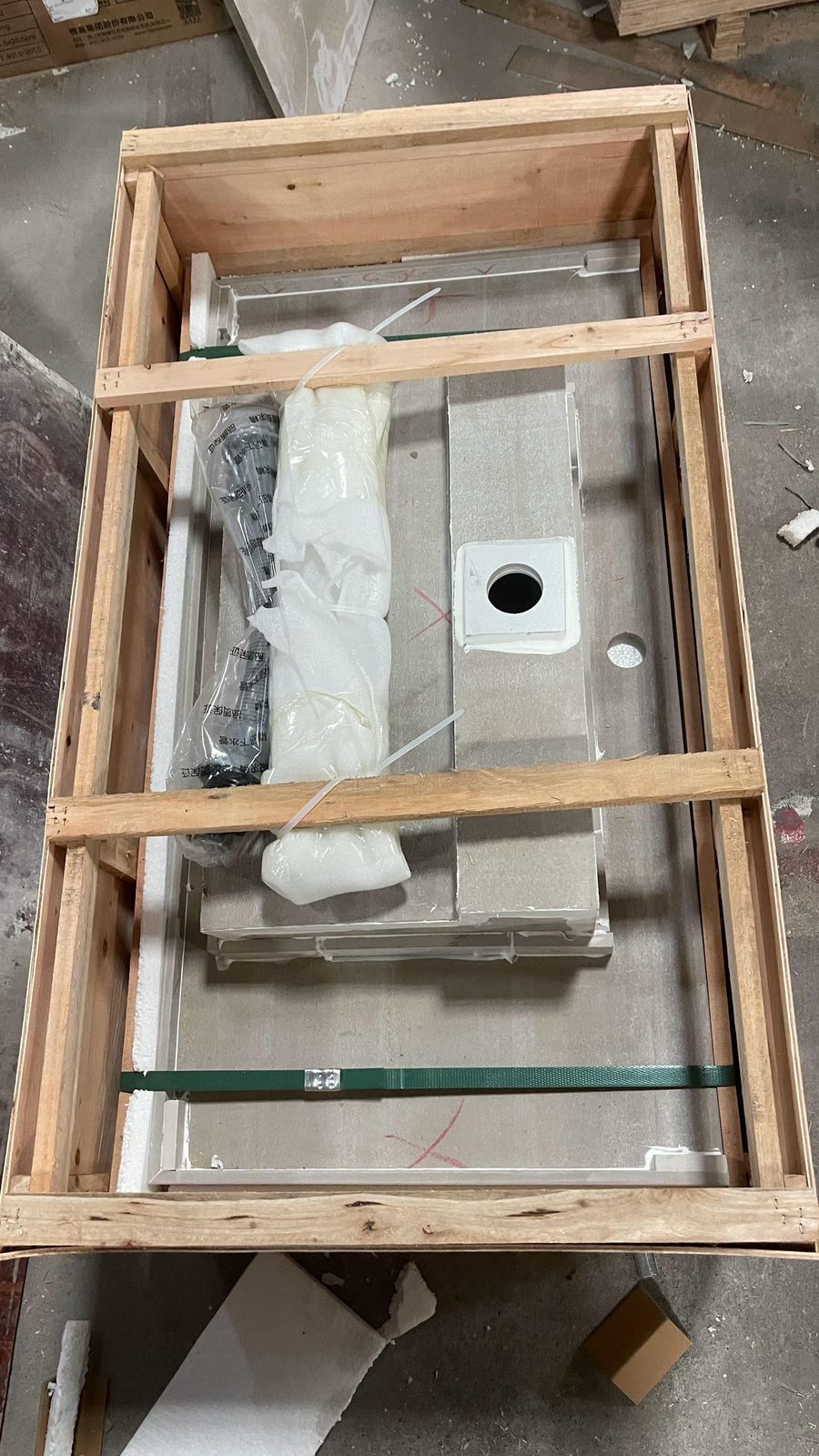
- Packing and inspection: foam plus wooden crate packing, a tape-measure check before packing, and a delivery inspection before signing.
- Repair terms: written terms for a cracked arrival and for a chip found after installation, agreed before ordering.
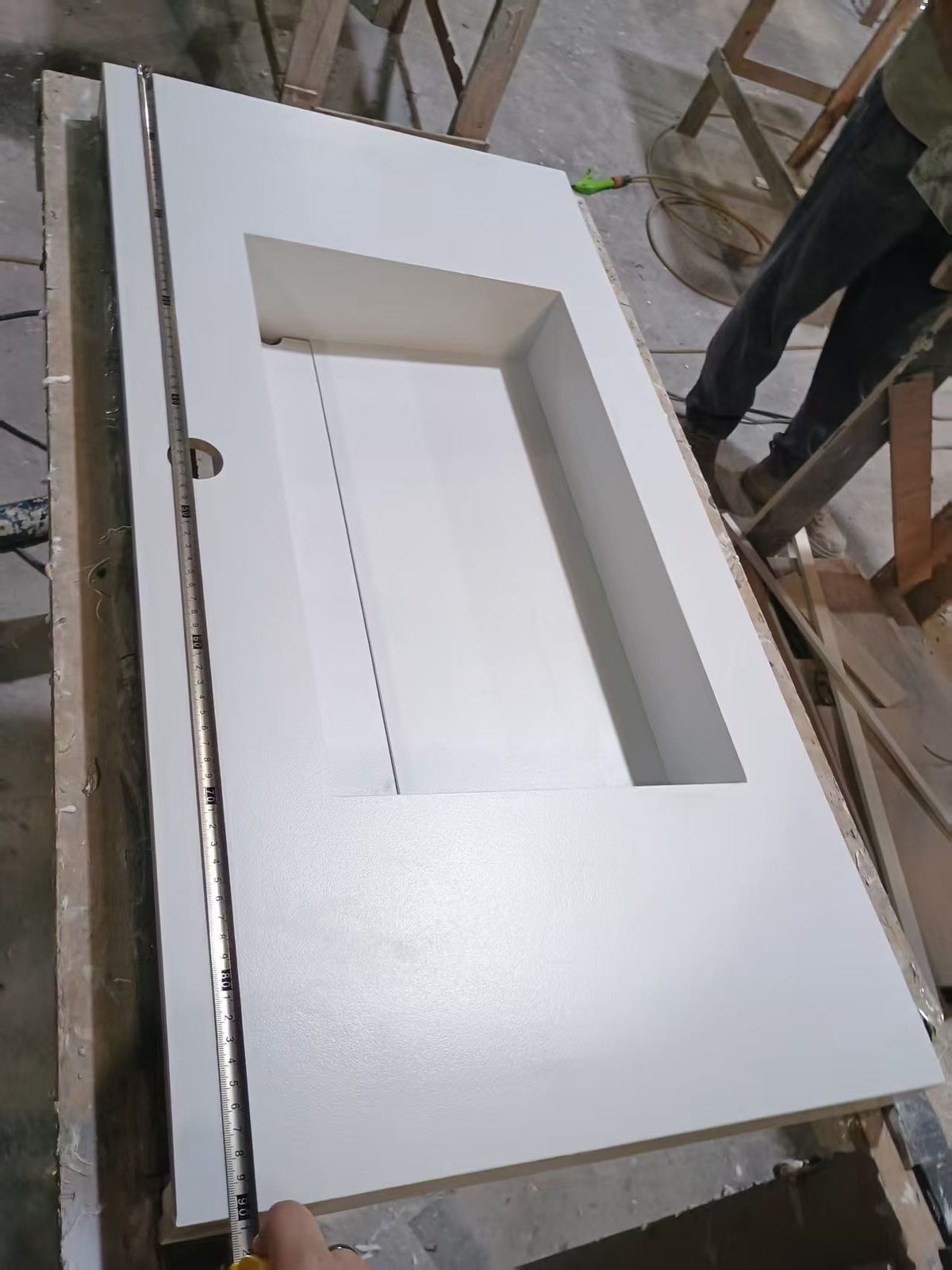
Vora factory practice gives those checks a starting point: each basin top gets a tape-measure check before packing, packing is foam plus a wooden crate, the smart LED mirror carries touch control with anti-fog optional, and hardware is Kubo/DTC or equivalent-grade.
Frequently asked questions
What is the downside of sintered stone?
The downsides buyers raise again and again are cost, weight, edge chipping, limited field repair, and installer skill. Naturalstonecity.com sums up the same four trade-offs: specialized installation required, hard to repair, few edge profile options, and a higher price.
Does sintered stone chip easily?
The face of the slab resists daily wear well, and the edges are the vulnerable part. Hunker describes sintered stone as prone to chipping and cracking along the edges, with repairs that tend to cost more. Protect edges through the renovation, and check them at delivery.
Can a chipped sintered stone basin be repaired?
Small edge chips can sometimes be rounded and re-polished by a fabricator. A crack through the body of the slab, or damage that cuts through the printed pattern layer, has limited repair options. Our repair guide sets out which damage is workable and which points to replacement.
Is sintered stone heavy, and does a wall-hung vanity need extra support?
Yes, weight deserves a plan. A buying guide from aurastone.com.sg describes sintered stone as heavy and notes that it may require additional support structures. Confirm wall structure and the fixing plan before delivery day, or choose a floor-standing unit.
Does the pattern run through a sintered stone slab?
For printed designs, the pattern sits in a surface layer. Hunker notes that the patterns on sintered stone are printed onto the material and do not run all the way through the slab. A deep chip can therefore expose the body colour beneath, so check edge colour and finish at selection time.
Ask about your bathroom
If the downsides above still leave sintered stone in the running, send the details that decide fit: room size, wall, basin width, tap model, and mounting type. The product range shows current units, and the configurator helps narrow width and layout before an inquiry. Tell the Vora team those details through the inquiry form so factory details can be confirmed before cutting.
When you send an inquiry, it goes to the Vora Surfaces team inbox at vorasurfaces@gmail.com or through the inquiry form. It is used only to reply to this inquiry, with no mailing list and no sharing of your details. We state no response time here.
Frequently asked questions
What is the downside of sintered stone?
The downsides buyers raise again and again are cost, weight, edge chipping, limited field repair, and installer skill. Naturalstonecity.com sums up the same four trade-offs: specialized installation required, hard to repair, few edge profile options, and a higher price.
Does sintered stone chip easily?
The face of the slab resists daily wear well, and the edges are the vulnerable part. Hunker describes sintered stone as prone to chipping and cracking along the edges, with repairs that tend to cost more. Protect edges through the renovation, and check them at delivery.
Can a chipped sintered stone basin be repaired?
Small edge chips can sometimes be rounded and re-polished by a fabricator. A crack through the body of the slab, or damage that cuts through the printed pattern layer, has limited repair options. Our repair guide sets out which damage is workable and which points to replacement.
Is sintered stone heavy, and does a wall-hung vanity need extra support?
Yes, weight deserves a plan. A buying guide from aurastone.com.sg describes sintered stone as heavy and notes that it may require additional support structures. Confirm wall structure and the fixing plan before delivery day, or choose a floor-standing unit.
Does the pattern run through a sintered stone slab?
For printed designs, the pattern sits in a surface layer. Hunker notes that the patterns on sintered stone are printed onto the material and do not run all the way through the slab. A deep chip can therefore expose the body colour beneath, so check edge colour and finish at selection time.
Sourcing hot-bent basins for your next project?
Send your drawings and target quantities — we'll confirm feasibility from the factory floor.
Configure your inquirySee the products behind these guides: production cabinet styles and buying terms for buyers & OEM.
Specifications verified against Vora Surfaces factory records. Editorial review applied. Spotted an error? Email corrections to vorasurfaces@gmail.com.