
Factory guide
Hot-Bent Sintered Stone Basins: How They're Made, Benefits, Trade-Offs & Specs
A hot-bent sintered stone basin is formed from a single slab heated until pliable, bent over a mold, then cooled to lock the curve. The body stays one continuous piece — no glued seam at the bend, and none of the dirt traps or joint failures of mitered, glued-up basins.
What “hot-bent” actually means
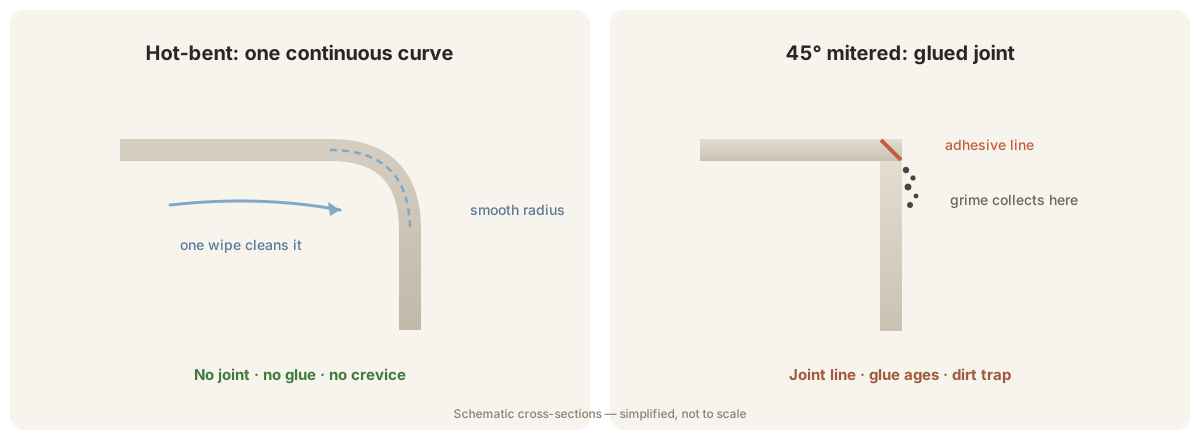
Most sintered stone basins on the market are assembled from pieces. A fabricator cuts flat slabs, miters the edges at 45 degrees, and glues them into a basin shape. Every joint is a seam: a line that collects grime, can yellow as the adhesive ages, and concentrates stress exactly where two pieces meet.
Hot bending starts from a single blank instead. The slab is heated until it turns pliable, then shaped over a mold in one continuous motion — front apron, bowl, and tap deck formed together. Nothing is cut apart at the bend, so there is no joint to glue and no joint to fail later.
The market uses several names for this. Retailers and shoppers say “hot-bent” or “hot bending”; factories tend to say “thermoformed”; some retail listings say “hot-press.” They usually describe the same product: a hot bending sintered stone basin shaped from one slab rather than glued from pieces. When a supplier uses any of these words, ask the one question that settles it — is the basin bent from a single slab, or assembled from glued pieces? The answer tells you what you are actually buying. For the head-to-head comparison, see hot-bent vs glued: a buyer’s decision guide.
How a hot-bent basin is made
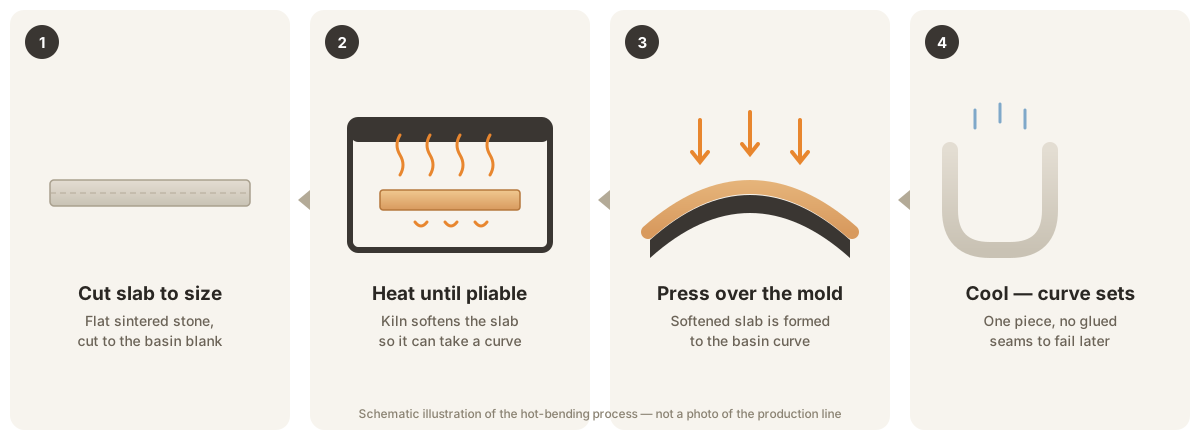
The sequence below is standard hot-bending practice — the steps any equipped factory follows. Kiln designs and cooling schedules vary by shop; what matters is that each step is controlled rather than rushed.
1. Slab selection and cutting. Sintered stone begins as mineral particles fused under heat and pressure into a dense, non-porous slab. The factory checks the slab for color consistency and surface defects, then cuts a blank sized for the basin mold.
2. Even heating. The blank goes into a bending kiln and is heated evenly across its full surface until pliable. Evenness matters more than peak temperature: a cold spot in the blank becomes a stress point in the finished basin. This is the step that separates an equipped factory from a workshop with a saw and a tube of glue.
3. Bending over the mold. While pliable, the blank is laid over a mold and formed into the basin profile in one continuous motion. The mold defines the geometry, so every basin pulled from the same mold carries the same curve.
4. Controlled cooling. The formed piece rests on the mold while it cools, which locks the curve and keeps the slab from warping as it stiffens. Basins that rock on a flat counter usually trace back to this step being rushed.
5. Trimming and edge work. Once set, the basin is trimmed to its final outline and the exposed edges are finished. Because the body is one piece, there are no joint edges to grind flush — the work is about finish, not hiding seams.
6. Inspection and water testing. Flatness, color match against the batch, and surface finish are checked; then the basin is water-tested for drainage. At the Vora Surfaces factory this includes tape-measure checks on basin tops before they move to packing — tape-measure checks on basin tops before they move to packing (see the factory photos).
Why buyers specify hot-bent over glued
Showroom photos hide these differences; daily use reveals them.
No seam, no dirt trap. A glued basin has a joint line exactly where water, soap, and toothpaste collect. A hot-bent curve has nothing there — one wipe cleans the whole surface. Anyone who has scrubbed around a vessel sink, inside the bowl and outside it and the counter trapped behind, knows how much cleaning geometry matters.
No glue to age. Adhesives yellow and embrittle after years of hot water and cleaning chemicals. A bend in solid stone contains no adhesive, so there is nothing to degrade at the most stressed point of the basin.
Stress runs through solid stone. Daily thermal cycling — hot water, then cold — works a glued joint every single day. A continuous bend distributes that movement through the material itself.
It reads as carved from solid stone. A bent curve carries a soft, continuous radius. A mitered basin, however well glued, shows faceted angles on close inspection. For hotel and premium residential projects, that visual difference is often the deciding factor. You can see how the curve looks across different widths and finishes in the product range.
Hot-bent vs 45° mitered (glued) basin
| Hot-bent (one-piece) | 45° mitered / glued | |
|---|---|---|
| Basin body | Single continuous slab, bent | Flat pieces joined at 45° with adhesive |
| Seam at the bend | None | Glued joint line |
| Dirt trap at the joint | No crevice to clean | Joint collects grime over time |
| Glue aging | No adhesive in the bend | Glue can yellow or weaken with age and heat |
| Crack risk at the joint | Low — stress runs through solid stone | Higher — adhesive plus stress concentration |
| Curve geometry | Smooth, continuous radius | Angled, faceted profile |
| Unit cost | Higher (kiln + molds + skilled labor) | Lower (saw + glue + less equipment) |
| Best suited for | Premium hotels, high-end residential, brand vanity lines | Budget and volume projects |
The honest trade-offs
Hot-bent is not the right answer for every project. Saying so plainly saves everyone a bad order.
It costs more. A bending kiln, molds, and operators who can read the material cost more than a saw and adhesive. If budget decides and the basin sits in a low-visibility rental unit, a well-made glued basin is the rational buy.
Custom curves need molds, and molds cost money. An existing mold means fast sampling and no tooling cost. A new curve means tooling a new mold — quoted separately, adding time before production starts. Settle the mold question before falling in love with a drawing. If you have target widths and finishes in mind, start from the configurator and we will confirm feasibility against existing tooling.
Curves are smooth, not sharp. Hot bending produces continuous radii. It cannot produce the crisp 90-degree folded edge a mitered joint gives. If the design calls for sharp architectural geometry, bending is the wrong process.
Chips are hard to repair. This is the material’s real weakness rather than the process’s: sintered stone is so hard and dense that a deep chip can’t be blended invisibly — polishing out damage tends to expose the body color beneath the printed surface. A fabricator can sometimes round and re-polish a small edge chip, but treat the surface as permanent and protect edges during handling and installation.
It still needs a competent installer. An experienced installer matters more than the basin construction. Installers warn consistently that uneven cabinet support creates stress points that crack stone tops around cutouts and corners, whatever the basin is made of. Level the cabinet and support the top fully.
Typical specifications
Figures below are typical ranges across the Vora Surfaces hot-bent range. Exact numbers vary by model — request the product datasheet for the model you are quoting.
| Parameter | Typical range |
|---|---|
| Overall width | 600–1200 mm |
| Slab thickness options | 6 / 11 / 12 mm |
| Drain position | Per drawing — confirm on the datasheet |
| Tap hole | Pre-drilled or undrilled, per order |
| Finish | Matte (other finishes per slab availability) |
| Cabinet pairing | Solid wood body; mounting per model |
Vora Surfaces builds around roughly 40 vanity models in this range, hot-bending every basin in-house at the Foshan factory, and produces across the full hot-bent category — not only catalog models. Custom widths and bowl positions start from the mold: send drawings and the factory confirms feasibility before quoting. The same shaping capability extends beyond vanities — custom one-piece pieces such as sloped shower trays come off the same line.
What to ask a hot-bending factory
These questions work whether you buy from Vora Surfaces or benchmark us against another supplier. They separate real hot-bending capability from relabeled glued product.
1. “Is the basin bent from one slab, or glued from pieces?” Ask for a photo of the bend or a video of the bending step. A real hot-bending line shows its kiln without hesitation.
2. “Which widths and curves are already tooled?” Existing molds mean no mold cost and faster sampling. Get any new-mold cost and added time quoted separately, in writing.
3. “How do you control cooling?” Warped basins come from rushed cooling. Ask how long pieces rest on the mold before trimming.
4. “What is checked before packing?” Flatness, color batch match, drainage test — at minimum. Ask us these directly on the contact page; you will get answers from the factory floor.
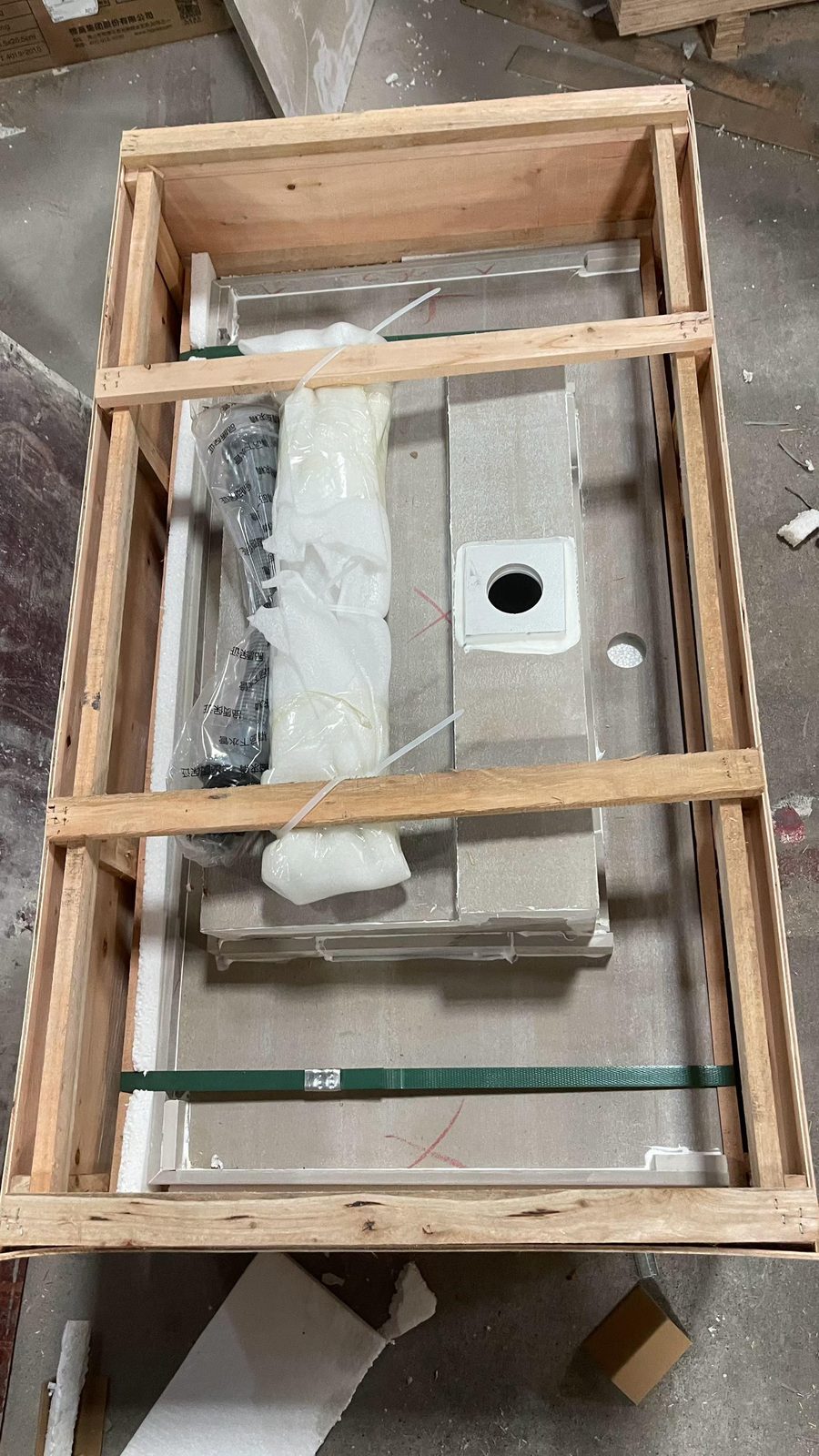
5. “How is it packed for export?” Stone basins break in transit when packing is an afterthought. Ask specifically about foam wrapping, crating, and corner protection. For reference, ours travel foam-wrapped inside wooden crates with internal framing and strapping.
Request a quote
If you are sourcing hot-bent basins for a project or a product line, send your drawings through the contact page — target widths, quantities, and finish preferences are enough for an initial feasibility check and quote. The more specific the drawing, the faster the answer.
Frequently asked questions
Can sintered stone be bent?
Yes — that is exactly what hot bending does. A sintered stone slab is heated until pliable, shaped over a mold, and cooled to lock the curve, producing a basin body from one continuous piece of stone. The trade term for the result is a hot-bent (or thermoformed) basin.
Is a hot-bent basin stronger than a glued one?
The weak point of an assembled basin is its glued joint: adhesive ages, and stress concentrates where two pieces meet. A hot-bent basin has no joint at the bend, so daily hot-and-cold thermal cycling works the solid stone instead of an adhesive line. The stone itself has the same properties in both constructions — the difference is where the stress goes.
Can a chipped sintered stone basin be repaired?
Only partially, and buyers should know this before ordering. Sintered stone is extremely hard, so a deep chip can't be blended invisibly — polishing out damage usually exposes the body color beneath the printed surface pattern. A fabricator can sometimes round and re-polish a small edge chip, but the practical advice is prevention: protect edges during transport and installation.
Do I need a specialist installer for a sintered stone basin?
You need an experienced one. Installers consistently warn that uneven cabinet support creates stress points that can crack a stone top around cutouts and corners, whatever the basin construction. Level the cabinet, support the top across its full footprint, and never let the stone bridge an unsupported gap.
What should I check when my vanity arrives?
Inspect before you sign: look for cracks across the top, check the corners and the drain cutout, and set the basin down to confirm it sits flat without rocking. Photograph any damage immediately — replacements move faster with clear evidence. At our end, basins are foam-wrapped and crated in wooden crates with internal framing and strapping, because most transit damage traces back to packing.
Does hot water damage a sintered stone basin?
No. Sintered stone handles normal domestic hot water without issue — the material is fired at far higher temperatures than any tap can produce. If a product listing says 'cold water only,' that is a limitation of that specific product's construction or warranty terms, not of sintered stone itself.
Sourcing hot-bent basins for your next project?
Send your drawings and target quantities — we'll confirm feasibility from the factory floor.
Configure your inquirySpecifications verified against Vora Surfaces factory records. Editorial review applied.