
Factory guide
Sintered Stone vs Quartz: 4 Spec Differences Importers Get Wrong
By Vora Surfaces Factory Editorial Team · Published 2026-11-03 · Foshan, China
Sintered stone is a fused mineral body with a printed surface pattern, and quartz is crushed stone bound in resin. That single composition gap drives four ordering decisions: pattern depth, heat guidance, seam construction, and chip repair. Importers who order on appearance alone tend to discover the gap after delivery, when a chip, a hot item, or a seam raises a complaint.
In short: Sintered stone is a fused mineral body with a printed surface pattern, and quartz is crushed stone bound in resin. That gap drives four ordering decisions: pattern depth, heat guidance, seam construction, and chip repair. Check those four items, with a cut edge sample in hand, before ordering.
Why importers mix the two materials up
A LinkedIn education post aimed at importers put it plainly in its title: “Quartz or Sintered Stone? 4 Differences Every Importer Should Know Before Sourcing.” The post exists because the two materials look alike in a showroom: polished slabs in marble looks. The showroom view hides what decides after-sales cost: body composition, pattern depth, heat behaviour, and repair outcomes.
A B2B decision table from a stone trade platform adds a second warning: poor sintered stone repairability, with chips showing the body, alongside strong batch consistency that reduces dry-lay inspections. For the wider picture, our ceramic versus sintered stone comparison covers a third material, and our durability guide covers daily use.
Difference 1: Composition and the binder question
Sintered stone starts as natural mineral particles. Heat and pressure fuse those particles into a dense slab, with no resin binder in the mix. Quartz starts as crushed quartz aggregate mixed with resin, typically around 93 percent quartz content. Those typical figures describe the category in general; a supplier should confirm its own mix in writing.
The binder shapes later decisions: resin responds to sustained high heat and accepts a colour-matched filler during repair, while a fused mineral body has no resin to soften or fill with, so heat and repair guidance read differently for each material. When a supplier describes a slab only as “stone,” ask in writing for the binder content, or confirmation that the body uses no binder.
Difference 2: Pattern depth, and what a chip exposes
On sintered stone, the pattern is printed at the surface. A deep chip can remove the printed layer and expose the body colour beneath, which reads as a dull spot. On quartz, the pattern is mixed through the resin-bound body, so a chip tends to show a similar colour family, with the polished finish gone at the damaged spot.
Pattern depth varies by maker, so treat general statements as a starting point for a sample check. Request a cut edge sample and, where possible, a chipped corner sample from the planned production run. The cut edge shows pattern depth; the chipped sample shows what a customer sees after an accident.
Difference 3: Heat guidance and seam construction
Heat guidance is a written specification: compare the two statements side by side. Quartz makers commonly advise trivets under very hot items, because sustained high heat can affect the resin binder. Sintered stone has no resin binder, so its heat guidance reads differently, and care around a sudden temperature swing still applies.
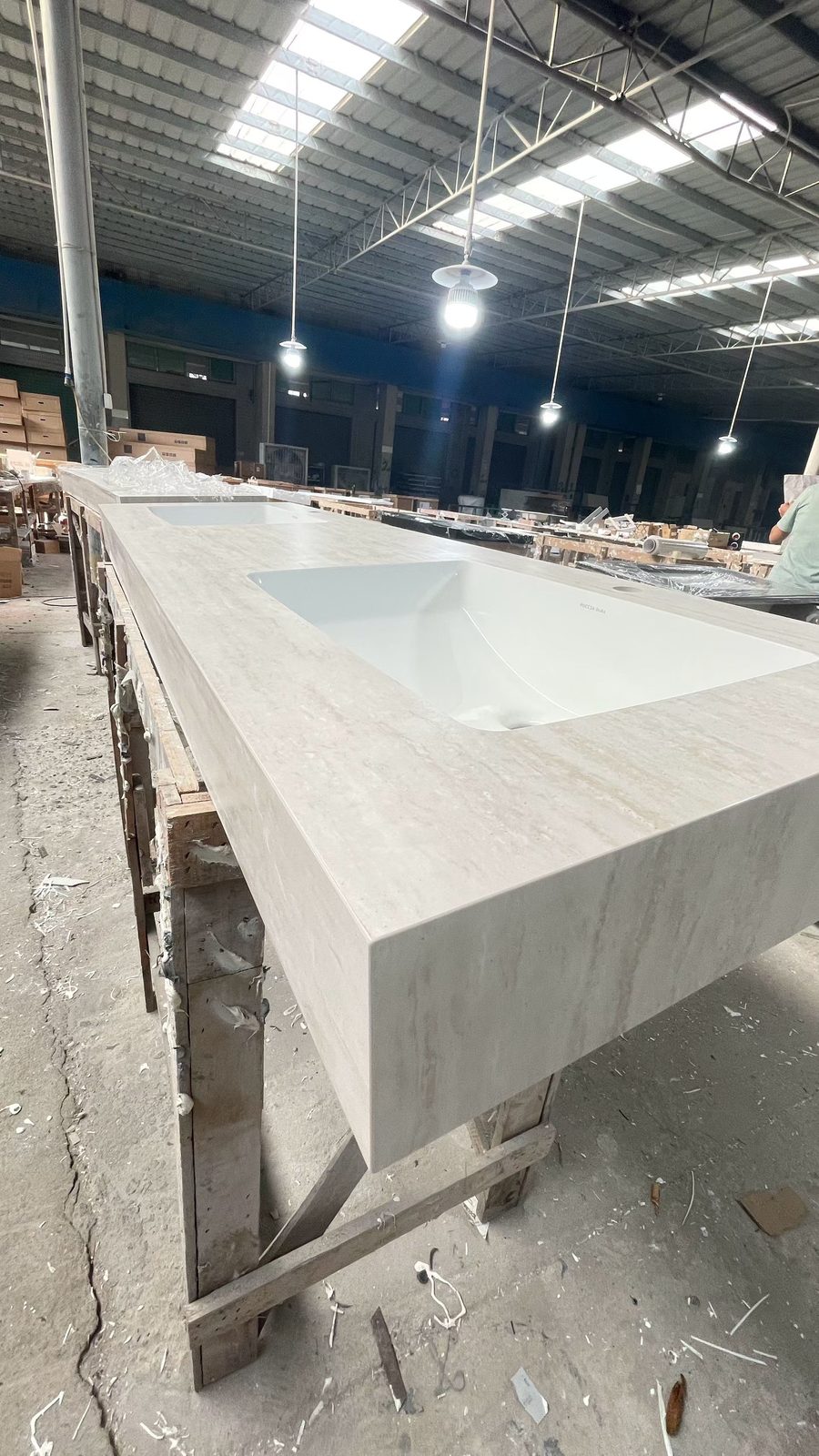
Seam construction is the second half of this difference. A quartz vanity top with a separate basin leaves a joint where basin meets top, sealed during installation. A hot-bent sintered stone basin can arrive as a one-piece unit, formed from a single slab with no glued seam at the bend. Our how a hot-bent sintered stone basin is made guide covers the forming process. One continuous surface wipes in one pass, with no sealant line to collect grime. Seam-free construction carries a cost, since forming a curve needs tooling and bending capability, glued construction suits fast samples and unusual angles.
Difference 4: Chip behaviour and repair expectations
Edge chips are the complaint that reaches importers after delivery. Trade sources describe sintered stone as prone to edge chipping, with repairs on the expensive side. A fabricator guide adds: a sharp impact can chip the surface, and polishing out damage removes the design layer and exposes the body colour beneath. A stone repair manual states the same limitation: limited repair options, with larger damage calling for factory-level equipment or replacement.
Quartz repair follows a different path: a fabricator can sometimes fill a chip with colour-matched resin filler, since the body already contains resin. The filler line stays visible on close inspection. Neither material offers an invisible repair for a large chip.
Set expectations before the sale: “small edge chips can sometimes be rounded and re-polished by a fabricator, and large chips call for replacement” works for sintered stone, and “a small chip can sometimes be filled, with a visible filler line on close inspection” works for quartz. A bare “chips can be repaired” promise creates a difficult conversation later.
The comparison at a glance
| Spec dimension | Sintered stone | Quartz (engineered stone) |
|---|---|---|
| Body | Mineral particles fused under heat and pressure | Crushed quartz bound with resin, typically 93 percent quartz |
| Binder | No resin binder | Resin binder, with pigment |
| Pattern | Printed at the surface | Mixed through the resin-bound body |
| Chip appearance | Can expose body colour beneath the printed layer | Tends to show a similar colour family, finish gone at the spot |
| Small chip repair | Sometimes rounded and re-polished by a fabricator | Sometimes resin-filled; filler line visible up close |
| Heat guidance | Stated in writing per product line; no resin binder to soften | Commonly advises trivets; sustained high heat can affect resin |
| Seam option | Can be hot-bent into a one-piece basin, no glued seam at the bend | Basin joined to a top leaves an installation joint with sealant |
| Colour range | Narrower set of printed looks, tied to slab runs | Wide range built from resin mixing |
Figures marked “typically” describe category norms; a supplier should confirm its own figures in writing. Performance numbers needing a laboratory report are left out.
What Vora factory records show
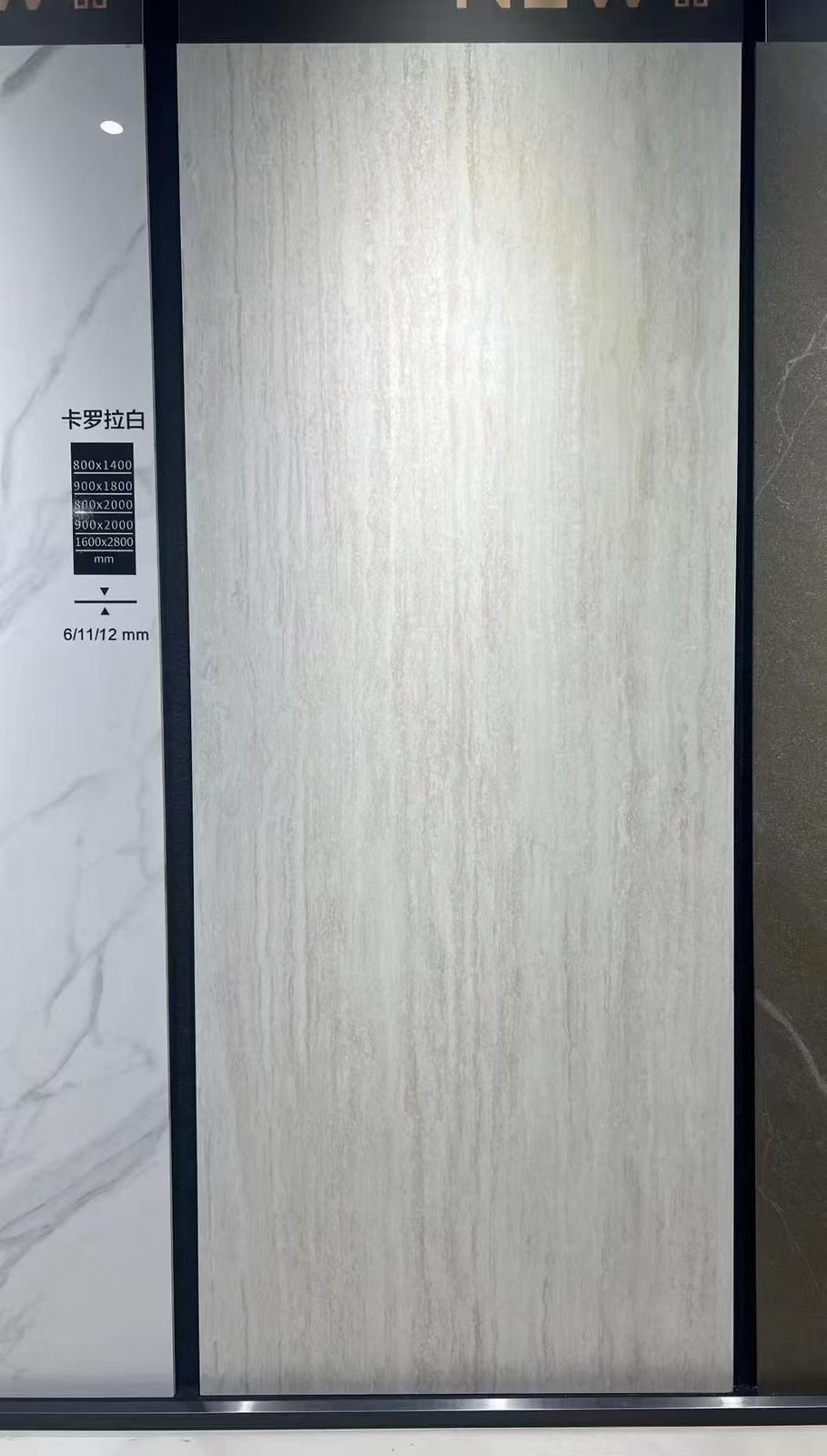
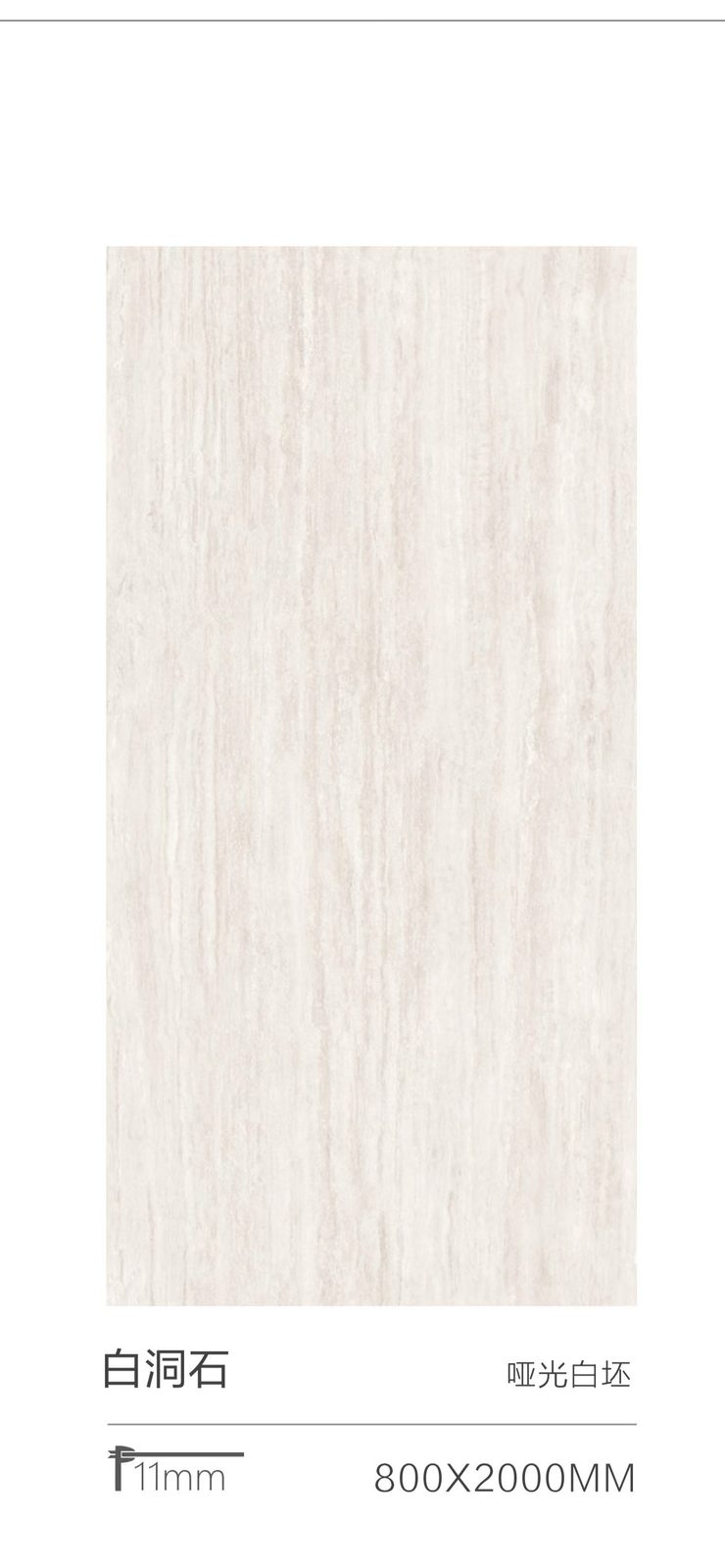
Slab sizes on the factory showroom chart run 800×1400, 900×1800, 800×2000, 900×2000, and 1600×2800 mm, with thicknesses of 6, 11, and 12 mm. A slab spec card on display shows a matte white body in a travertine look, 11 mm thick, 800×2000 mm: body tone, thickness, and dimensions on one card.
Hot-bending is done in-house at the Foshan factory, with the full hot-bent basin and vanity category in production beyond the catalogue of around 40 models in the common 60–120 cm widths. Basins are pre-drilled for tap holes at the factory, and mainstream mixer tap specs are supported, with hole sizing confirmed at order time. Cabinet bodies are solid wood with a moisture-proof treatment; mirror cabinets are LED with touch control, anti-fog optional; hardware is Kubo/DTC or equivalent-grade.
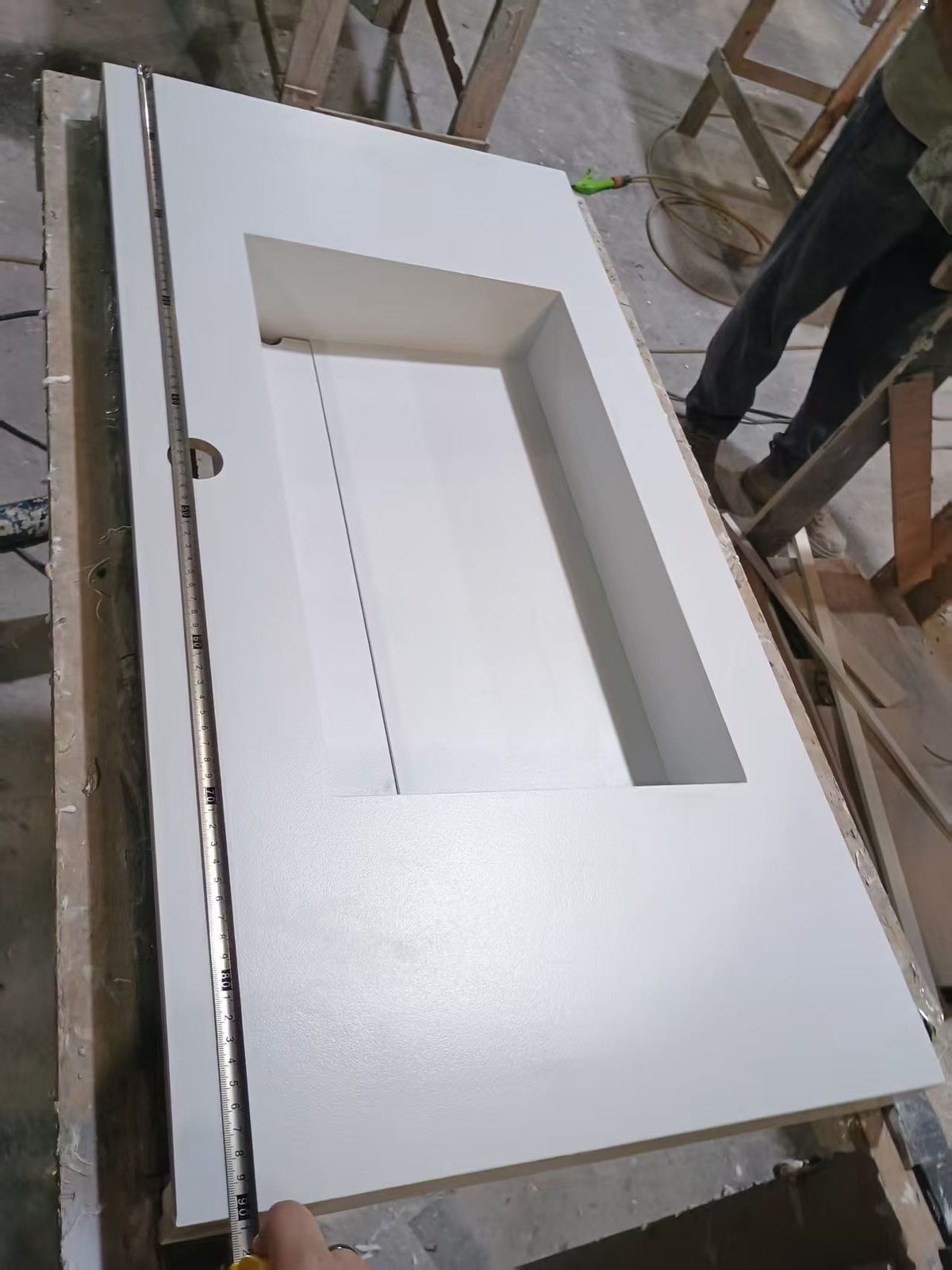
Tape-measure checks on basin tops precede packing, and packing uses foam plus a wooden crate — a measured top in a transit-built crate, though transit handling stays outside factory control.
Spec-sheet checks before ordering
Run these checks on every new supplier before ordering:
- Binder statement. Ask for binder content in writing, or confirmation that the body uses no binder.
- Pattern depth samples. Request a cut edge sample and a chipped corner sample from the production run.
- Written heat guidance. Ask for the heat statement for the exact product line, including trivets and sudden temperature swings.
- Repair procedure. Ask for the repair procedure for small and large chips, plus a repaired sample.
- Slab sizes and thicknesses. Confirm the size and thickness for each model; a printed look can change between runs.
- Construction and support. Confirm one-piece versus joined construction, who seals the joint on site, and wall-hung support.
A supplier that answers these six checks with samples and written specs is easier to carry. Keep the answers with the purchase order.
Honest limitations: where quartz fits, and where sintered stone disappoints
Quartz fits well in several lines. Colour and pattern range is the clear case: resin mixing supports a wide catalogue of looks at a workable price point, suiting private-label lines. Price-driven lines are a second case: where unit price decides a tender, a resin-bound line often lands lower for comparable sizes. Shape variety is a third case: joined construction suits unusual angles and fast samples.
Sintered stone disappoints in matching places. Unit cost runs higher, reflecting material and tooling, making it a weak fit for rental programs and price-led tenders. Repair options stay limited, and a large chip usually calls for replacement. Weight constrains wall-hung installations: proper support is required, and uneven support can crack cut-outs. Supplier depth is a fourth constraint: fewer factories run real bending capability, so verify any bending claim; our companion guide covers ceramic versus sintered stone for buyers weighing a third material.
The honest summary: carry quartz where colour range and unit price decide the order, and carry sintered stone where seamless construction and batch consistency decide the order.
Frequently asked questions
What is the composition difference between sintered stone and quartz?
Sintered stone is mineral particles fused under heat and pressure into a dense slab, with no resin binder in the body. Quartz is crushed quartz aggregate bound with resin, typically around 93 percent quartz content. Ask a supplier to state the binder in writing.
Does the pattern run through the body?
On sintered stone, the pattern is printed at the surface, so a deep chip can expose the body colour beneath. On quartz, the pattern is mixed through the resin-bound body, so a chip tends to show a similar colour family, with the finish gone at the spot. Request a cut edge sample before ordering, since pattern depth varies by maker.
Can quartz handle the same heat as sintered stone?
Treat heat guidance as a supplier specification, and get it in writing. Quartz makers commonly advise trivets under very hot items, since sustained high heat can affect the resin binder. Sintered stone has no resin binder, so its heat guidance reads differently, and sudden temperature swings still need care.
Can a chipped sintered stone basin be repaired like a quartz basin?
A small edge chip on sintered stone can sometimes be rounded and re-polished by a fabricator, while a larger chip usually calls for replacement, since polishing removes the printed layer. A quartz chip can sometimes be resin-filled, with the filler line visible on close inspection. Confirm the repair procedure with a fabricator before promising an outcome.
Talk to the factory
If you are choosing between sintered stone and quartz for a real order, send the project type, sizes, and colours under consideration. Browse the range for current models, use the configurator to test basin finishes, or request a quote with the spec-sheet checks above attached.
When you inquire: a member of the Vora Surfaces team replies through vorasurfaces@gmail.com or the contact form. Your details are used only for this inquiry, with no mass mailing and no forwarding to other lists. No fixed turnaround is promised here.
Specifications verified against Vora Surfaces factory records. Editorial review applied. Spotted an error? Email corrections to vorasurfaces@gmail.com.
Frequently asked questions
What is the composition difference between sintered stone and quartz?
Sintered stone is mineral particles fused under heat and pressure into a dense slab, with no resin binder in the body. Quartz is crushed quartz aggregate bound with resin, typically around 93 percent quartz content. Ask a supplier to state the binder in writing.
Does the pattern run through the body?
On sintered stone, the pattern is printed at the surface, so a deep chip can expose the body colour beneath. On quartz, the pattern is mixed through the resin-bound body, so a chip tends to show a similar colour family, with the finish gone at the spot. Request a cut edge sample before ordering, since pattern depth varies by maker.
Can quartz handle the same heat as sintered stone?
Treat heat guidance as a supplier specification, and get it in writing. Quartz makers commonly advise trivets under very hot items, since sustained high heat can affect the resin binder. Sintered stone has no resin binder, so its heat guidance reads differently, and sudden temperature swings still need care.
Can a chipped sintered stone basin be repaired like a quartz basin?
A small edge chip on sintered stone can sometimes be rounded and re-polished by a fabricator, while a larger chip usually calls for replacement, since polishing removes the printed layer. A quartz chip can sometimes be resin-filled, with the filler line visible on close inspection. Confirm the repair procedure with a fabricator before promising an outcome.
Sourcing hot-bent basins for your next project?
Send your drawings and target quantities — we'll confirm feasibility from the factory floor.
Configure your inquirySee the products behind these guides: production cabinet styles and buying terms for buyers & OEM.
Specifications verified against Vora Surfaces factory records. Editorial review applied. Spotted an error? Email corrections to vorasurfaces@gmail.com.